Updated
Equipment Tracking Tags: Which Tag, and How to Mount It
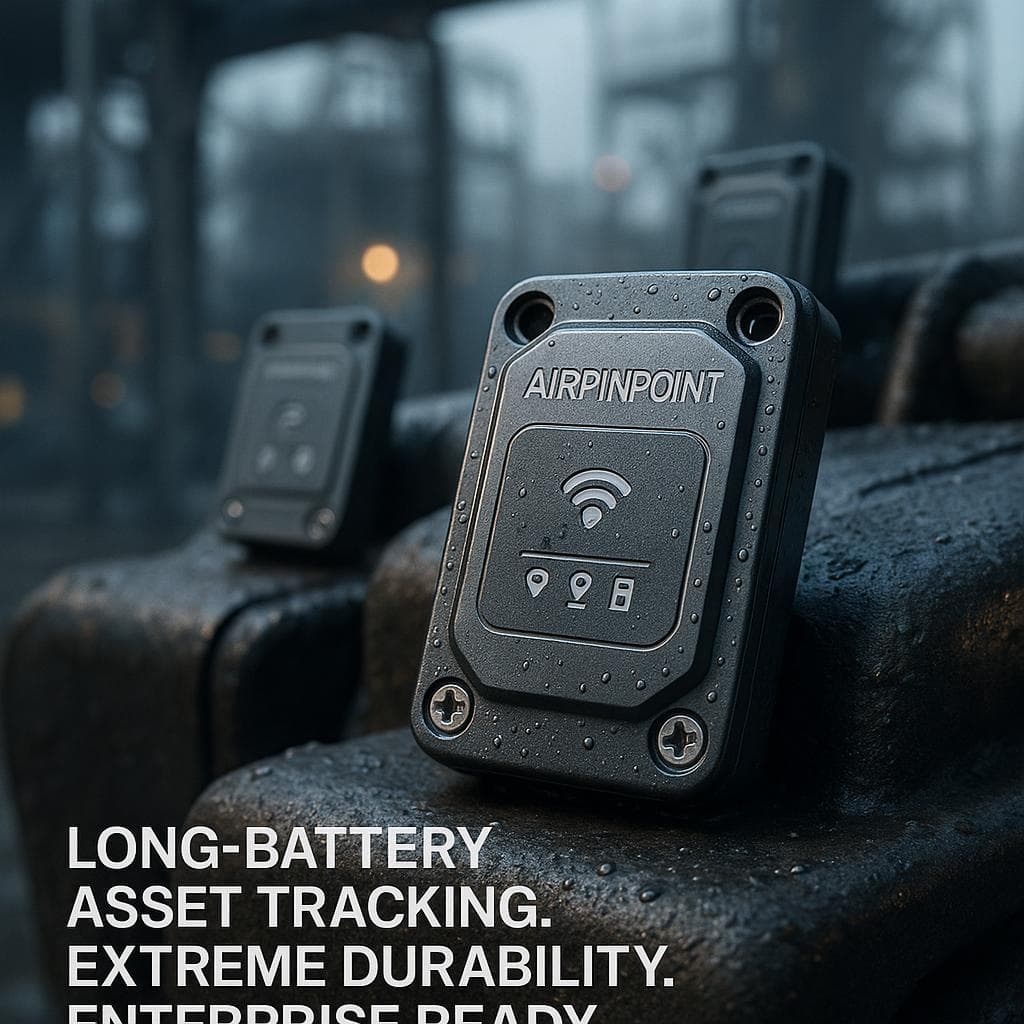
Two decisions determine whether a tagged machine actually shows up on a map: which tag you put on it, and where on the equipment you mount it. Most DIY equipment tracking fails on the second one. A tag is only as good as the radio path between it and a passing phone, and a lot of equipment is a solid steel box that blocks exactly that path.
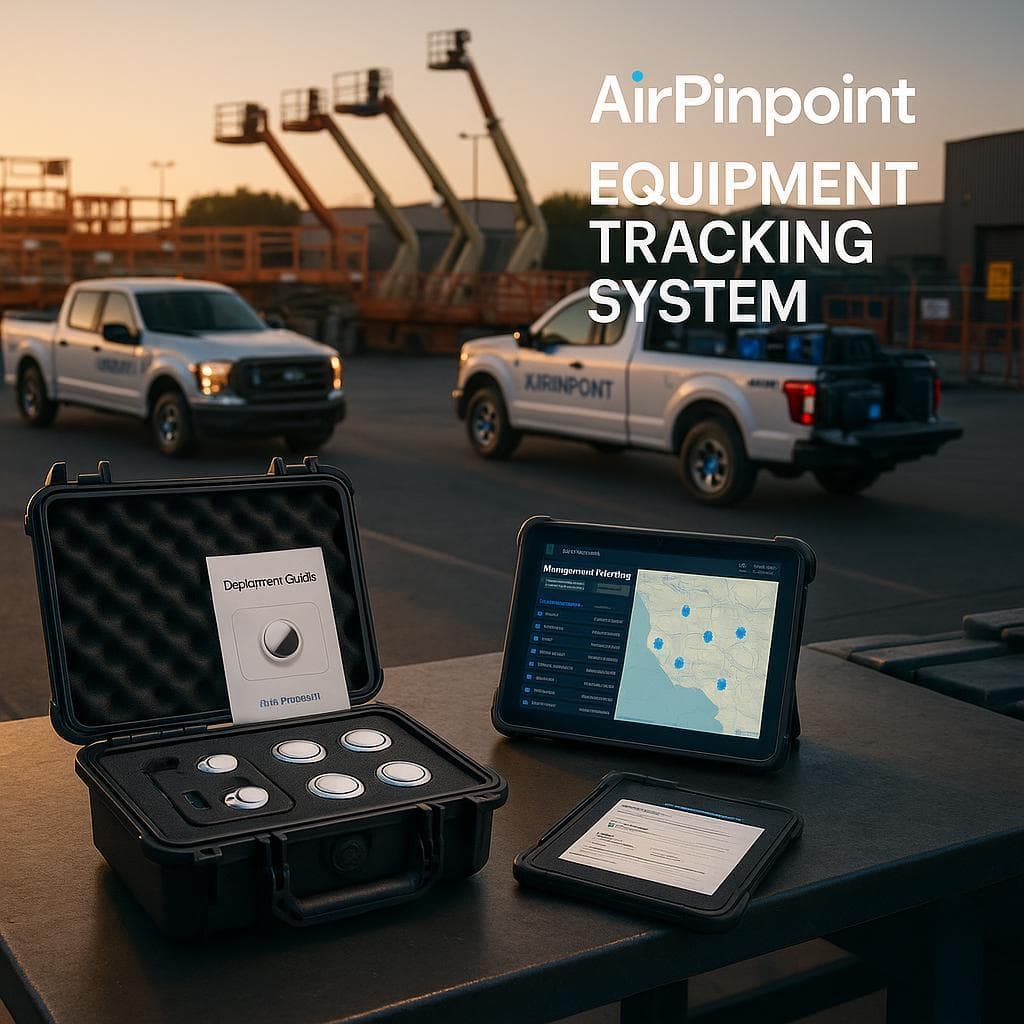
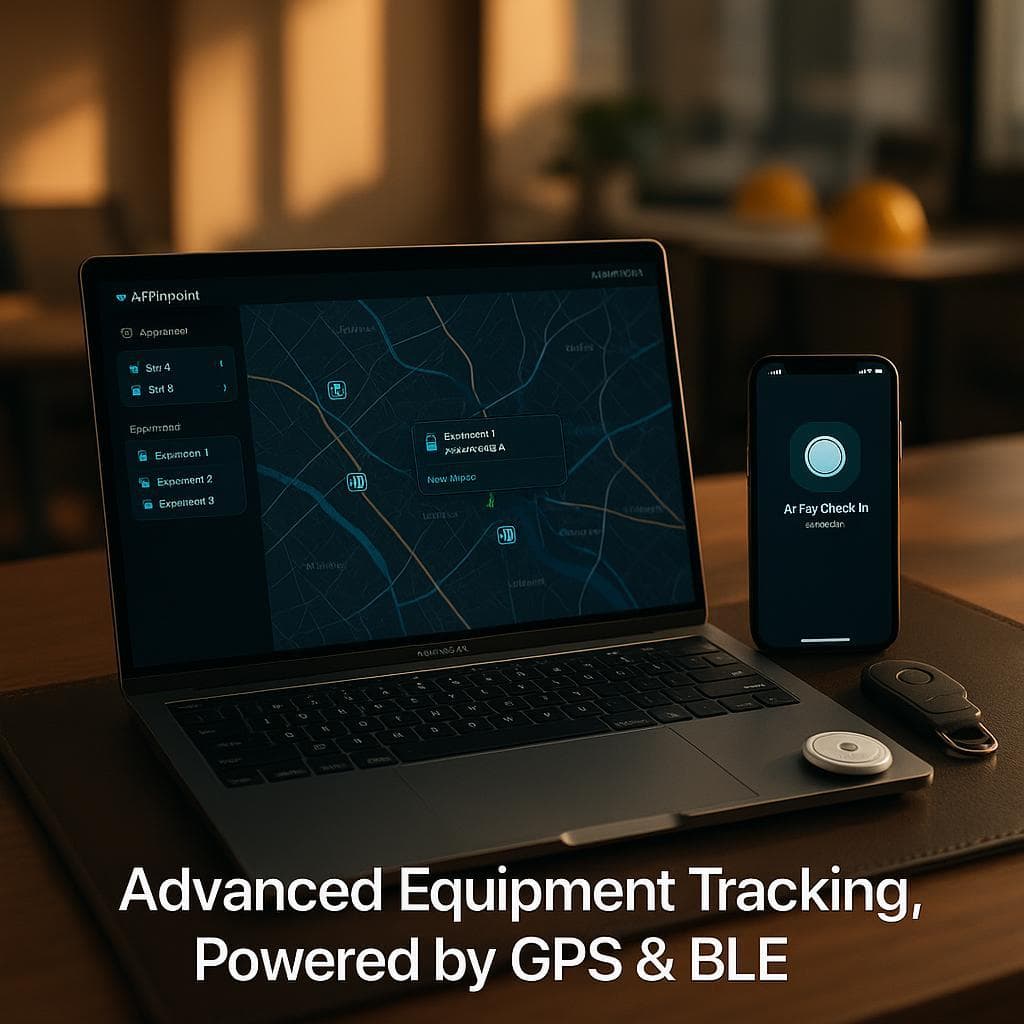
Updated July 2026. For the platform that manages the tags, see best equipment tracking software; for the full build, see equipment tracking system.
Which Tag: Standard Find My vs Custom Long-Life Beacon
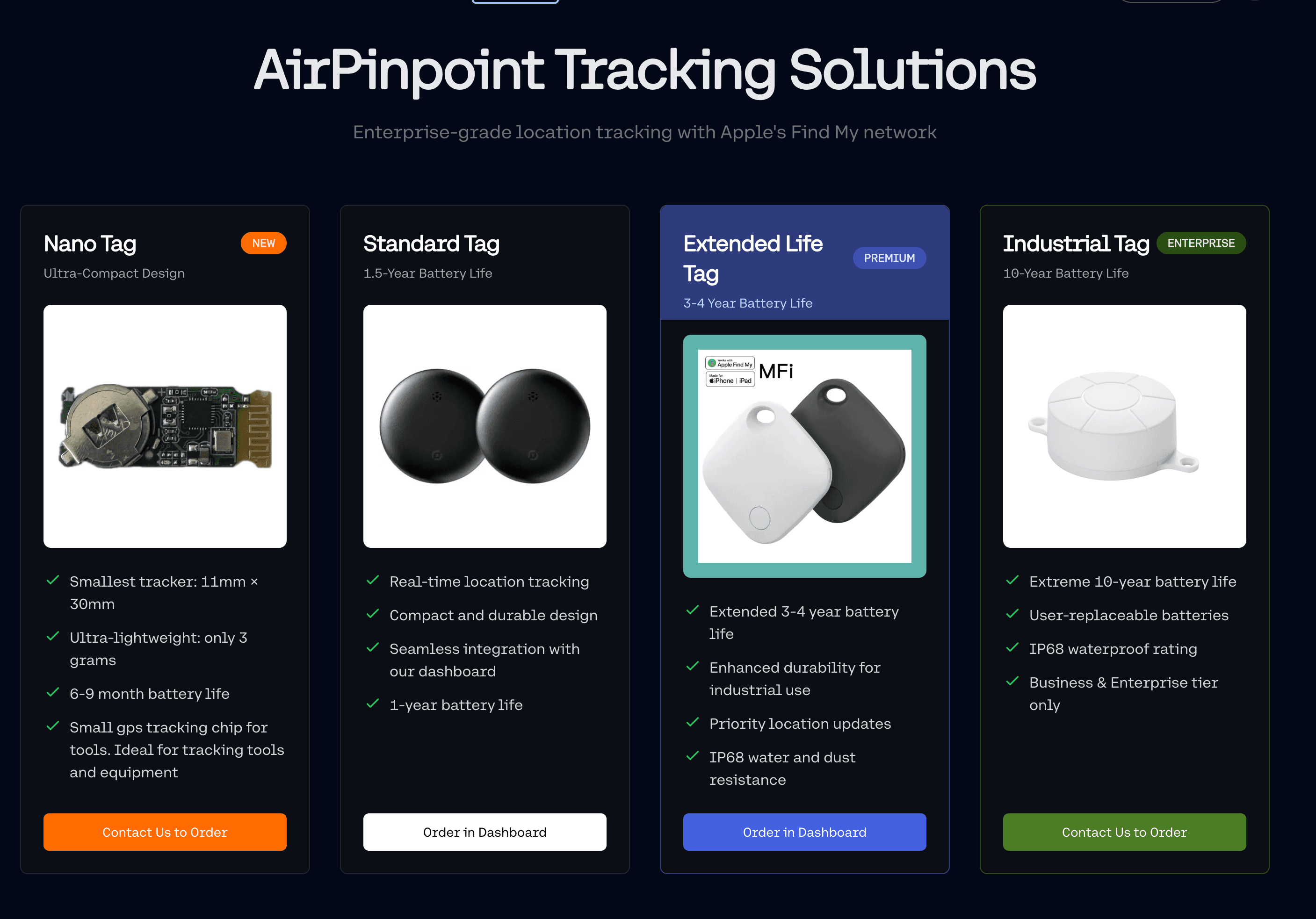
| Standard Find My tag (AirTag) | Custom long-life Find My beacon | |
|---|---|---|
| Cost | ~$29 one time | Higher one-time, quoted |
| Battery | Replaceable CR2032, over 1 year | Sealed, engineered for 7-plus years |
| Best for | Assets you can service yearly | Remote or hard-to-reach assets |
| Ruggedness | IP67, consumer housing | Ruggedized housing |
| Network | Apple Find My | Apple Find My |
Both report location the same way: through Apple's network of over a billion devices, with no SIM and no cellular fee. The choice is service interval, not capability. Tag a skid steer that comes back to the yard weekly with a standard tag and swap the coin cell once a year. Tag a generator that lives on a remote site for years with a custom beacon so you never touch it. Airpinpoint runs both on one dashboard.
Ignore any "3 to 5 year battery" claim on a generic coin-cell tag. A CR2032 is rated for about a year in this duty cycle; the multi-year number only comes from a purpose-built beacon with a larger sealed cell.
The Mounting Rule: Keep the Radio Out of the Steel
A Find My tag broadcasts over Bluetooth at roughly 30 to 100 feet in open air. A solid metal enclosure blocks that signal almost entirely. Seal a tag inside a welded cab cavity or a closed steel toolbox and it only reports when a relay phone is nearly on top of it, which on a job site means almost never.
Mount for the radio, not for hiding:
- Near a vent, gap, seam, or non-metal panel. Crews running 3D-printed PETG mounts with neodymium magnets on excavators and skid steers report the most reliable detection from an exposed edge, not a hidden steel pocket.
- At least one side exposed to open air. Pressing the tag flat against a large metal surface creates a partial Faraday-cage effect that shortens close-range detection even when the tag still reports.
- Bait setup: pair a visible decoy tracker with a hidden real tag. A thief who finds and kills the obvious one leaves the real one reporting. This is exactly how a Central Florida contractor recovered a $20,000 trailer in December 2024: a hidden Find My tag pinged to a property in Apopka where deputies found the trailer and several other stolen vehicles.
Real Specs (Not Inflated Ones)
For a standard AirTag on equipment:
| Spec | Real value |
|---|---|
| Battery | CR2032 coin cell, Apple-rated over 1 year |
| Operating temperature | -4F to 140F (-20C to 60C) |
| Water/dust | IP67 (submersion to 1 m for 30 min) |
| Radio | Bluetooth relay + U1 Ultra Wideband for close finding |
Cold is the spec that bites outdoor equipment. A CR2032 loses 15 to 20 percent of capacity around -20C, and below roughly -17C its voltage can droop under the shutdown threshold during a high-current radio pulse, so a tag parked outside through a deep freeze can go silent until it warms back up. A Nordic engineer documented eight coin-cell beacon prototypes failing in a freezer within two days until a small capacitor was added to buffer the radio pulses. For sustained cold, plan more frequent swaps, use a custom beacon, or move to a cellular unit rated for it.
Which Equipment to Tag
Tag anything worth more than the tag that can move or walk off. In practice that is most of a yard: trailers, generators, compactors, plate compactors, attachments, tool chests, and lower-value machines that would never justify a $200 cellular unit. Equipment theft runs an estimated $300 million to $1 billion a year with fewer than 25 percent of machines recovered, and tracked equipment flips that: LoJack data showed 69 percent of tracked machines recovered within 24 hours of being reported. A $29 tag on a $30,000 machine is the cheapest insurance in the yard.
Reserve cellular or satellite trackers for the handful of assets that work in genuinely remote terrain with no passing phones. For everything on populated sites, a Find My tag mounted where its radio can breathe is enough.
Where to Go Next
- Equipment tracking system: how the tags, network, and software fit together.
- Best equipment tracking software: the platforms ranked, with a real pricing matrix.
- Rental equipment tracking: tagging assets that live in a customer's hands.
 Our Solution